
Nicolas Cage makes yet another fine film, "Drive Angry." To accompany the review of "Drive Angry" we watch a film about a killer tire. A psychokinetic killer tire. Plus we briefly touch on the departure of Darren Aronofsky from the new Wolverine film. All-in-all a fine episode.
Boondock Saints I & II
Starring: Sean Patrick Flanery, Norman Reedus, Willem Dafoe Directed by: Troy Duffy
Happy St. Patrick’s Day to ya! Did you go to church this morning? Or maybe just to the bar to kick back a few pints?
If you haven’t started celebrating yet, I suggest you celebrate by watching Boondock Saints. There’s nothing like some vengeance wrought by a pair of Irish-American brothers in Boston to help you honor the patron saint of Ireland.
Connor (Sean Patrick Flanery) and Murphy (Norman Reedus) MacManus are two churchgoing, sunglasses-wearing, constantly smoking brothers who also appear to be fun loving and somewhat immature, based on early scenes. Some unfortunate repercussions from a fight at their favorite bar introduce them to the opera-listening, flaming and brilliant FBI agent Smecker (Willem Dafoe).
Their manic friend Rocco (David Della Rocco) is a part of the Italian mob, and together they go on an entertaining quest to rid the city of undesirable elements. Great combinations of sheer luck, skill and exaggerated violence help the boys make progress toward their goal , all the while confounding the local police – who are constantly sent to go get coffee and/or bagels for Smecker as a punishment for cluelessness.
If you:
- Prefer a more serious/dramatic vigilante film
- Are unwilling to suspend your disbelief
- Are disturbed by ridiculous violence
- Don’t appreciate the beauty of prayer/ritual (especially in Latin)
Don’t put it in the queue.
If you:
- Like CSI-styles shows where the cops have to figure out a homicide that has been carried out in an unusual manner
- Like action films with a little gratuitous violence
- Love the versatility of Willem Dafoe (in my opinion, he MAKES this movie excellent)
- Hunger for Veritas and Aequitas
- Like a cute Irish accent
- Don’t expect a serious drama
Put it in the queue!
Then I watched Boondock Saints II: All Saints Day. I cannot, in good conscience, recommend this movie. Aside from some of the confrontation scenes – the last shootout in particular – this movie was a waste of time. Here are all the reasons I do not recommend putting this in the queue at all:
- They tried too hard to make it have a plot. And the plot is pretty terrible.
- Their new ‘sidekick’ is kind of annoying. Rocco was too, but in a different, more tolerable way.
- The humor just isn’t there. It seemed like if there was any lapse in dialogue, they just filled it with a gay joke or an f-bomb. Not funny.
- The cops aren’t humorously incompetent, they are painfully incompetent and falling all over themselves for FBI special agent Eunice Bloom (Julie Benz – who I find über annoying), who replaced Smecker.
- It is too long – nearly two hours. It probably would have been half an hour shorter if they hadn’t felt the need to include a boatload of flashbacks from the first film.
- The ending includes a cheesy and blatantly obvious eye toward a third installation. Blasphemous…
I almost recommended it for those who were really interested in the back story for Il Duce. But really, it’s just a couple more flashbacks that aren’t all that enlightening.
Skip this one and go have a couple more green beers instead. A hangover is more pleasant than this sequel.
Written by Jennifer Venson
Dead End
Starring: Ray Wise, Lin Shaye, Mick Cain, Alexandra Holden Directed by: Jean-Baptiste Andrea, Fabrice Canepa
Not too long ago I watched a movie titled “The House of the Devil.” It was slow and dull, but critically adored. I believe Drew lauded it as a film never to watch during out month long extravaganza of horror reviews in October. If one compliment can be made about the film, it would be that it was painstakingly filmed to reflect the horror film genre of the early to mid-80s.
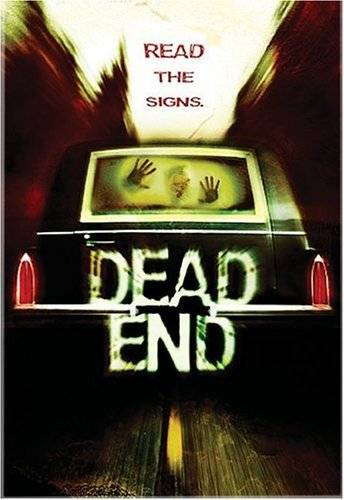 When I sat down to watch “Dead End” I had no expectations for it to take a similar route. However, as the movie opened in a station wagon with hilarious, intentionally cheesy dialogue (“It’s the same damn thing every year. Where are my shoes, or I can’t find my Marilyn Bronson CD,” “Uh, Marilyn Manson,” “Well, whatever her name is.”) followed by a fine metal riff to bridge the 30 second intro and the credits, I knew I was in for a treat.
Unlike “The House of the Devil,” the film is not necessarily set in the 80s, but it borrows the same tried and true formula from the genre. A family of four - father, mother, son, and daughter, with daughter’s boyfriend along as well for good measure, are going to visit grandma on Christmas along a creepy, deserted road. It isn’t the usual route, but this year dad has decided to take an alternate route to keep things fresh and interesting.
It’s not long before it is obvious they are lost. The parents bicker, the daughter tries to decide how to tell the boyfriend they’re through, and the youngest, pot-smoking son provides comedy relief.
Along the way they see a woman on the side of the road carrying a baby and agree to take her to a nearby cabin to try and call the police. Can’t be a good idea. As the evening starts to spiral in to mysterious disappearances and gruesome deaths, not to mention a black, menacing hearse, the theories begin to swarm. Ghosts? Hallucinations? Aliens?
The movie is fueled by the script, keeping the gore level low. The casting is spot on and this, in particular, really helps pull the production together. A majority of the film is spent inside the station wagon as the family starts to panic, and the entire show is filmed on one seemingly never ending road. I’m always amazed when a film can take one extremely basic locale and make it intriguing for 90 minutes. I’m not saying this film is “127 Hours” or “Buried, “ but for a low-budget niche horror picture, the dialogue and script are at times quite clever. It is very successful at ratcheting up the suspense and includes a healthy dose of black comedy.
When the conclusion of the film is finally revealed, it feels almost a bit too tidy and reliable. But in this way it also feels exactly like the genre it is giving a sly wink to all along, especially in the epilogue.
Even though the outline is familiar, I believe anyone interested in the horror genre would enjoy “Dead End.” It is engrossing and original enough to interest moderate genre fans, and nostalgic enough for long time fans of horror tired of the current paint-by-the-number schlock being mass produced for theatres today.
Written by Ryan Venson
Perfume: The Story of a Murderer
Starring: Ben Whishaw, Dustin Hoffman, Alan Rickman Directed by: Tom Tykwer
Genius. Talent. Is it a blessing or a curse? Perhaps that depends on the type of innate gift one has. In Perfume: The Story of a Murderer, Jean-Baptiste Grenouille (Ben Whishaw) is born with an extraordinary sense of smell that brings him as much misfortune as it does pleasure.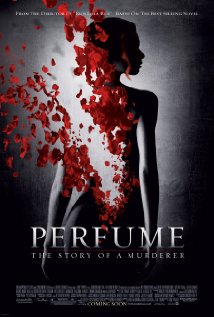
Literally moments after he arrives in the world, his keen nose saves one life and leads to the end of another. His intense fixation on exploring scents makes him somewhat of an outsider in the orphanage where he grows up; he sniffs everything (including sticks and a dead rat) and whiles away his free time parsing out the aromas of the dirt, rocks, water bubbling in a nearby brook, wet rocks…you get the idea.
Circumstances eventually take him to the olfactory smorgasbord of the Paris marketplace. One new scent in particular bedevils him – that of a beautiful young redhead (Karoline Herfurth) wending her way through the streets selling golden plums. His limited social skills make his desire to indulge in her scent a bit creepy – he follows her, sneaking up behind her to sniff her hair and skin. Their interaction ends badly and leaves Jean-Baptiste with a new haunting obsession – how to preserve a woman's scent after life slips away from her body.
His keen nose earns him an apprenticeship with a struggling perfumier Giuseppe Baldini (Dustin Hoffman), who teaches him the art of distilling fragrances and the craft of creating fine perfume. This method does not suit Jean-Baptiste's needs, so he travels to Grasse, Italy to learn other ways of preserving scent. There, he experiments with new methods until he finally discovers one that delivers the essences he desires.
Perfume: The Story of a Murderer is a strange movie, but definitely worth the weird. If you like:
- A bit of the bizarre
- A tale told well (the movie is based on the novel Das Parfum by Patrick Süskin and is narrated in some parts)
- A light thriller – suspenseful, but not in a heavy-handed way; somewhat predictable yet still with surprises
Put it in the queue!
If you don't like:
- Depictions of noisy, crowded, filthy 18th century Paris
- Aberrant behavior involving nudity, violence, sexuality, and disturbing images (all of which contribute to the film's R rating)
- 'Discreet' murder (i.e. not messy, noisy, scary etc.) in your movies
Don't put it in the queue.
Written by Jennifer Venson
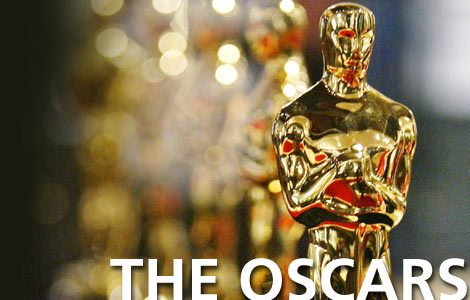
Academy Awards -- The After Party!

83rd Annual Academy Awards - Press Room
Drew and I fall in to a deep depression after Fincher and the Social Network go down hard in the face of an "Academy" film. Whatever the hell that means. Seriously, Tom Hooper? That guy directed Texas Chainsaw Massacre! Wait a second.....maybe that was Tobe Hooper. Eh, whatever. Also we try and decipher just how high James Franco was. Probably really high.
Night of the Comet
Global warming, increased occurrences of earthquakes, tsunamis, large numbers of birds randomly dropping dead mid-flight and falling out of the sky. These all might be signs of the end of the world as we know it. Zombie invasions always prove to be an interesting topic of apocalyptic speculation. Threats from outer space haven’t really been at the top of the list in terms of potential sources of doom lately though. Enter Night of the Comet.
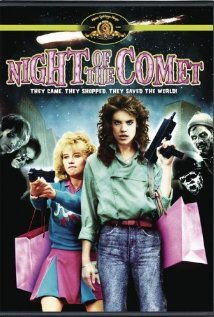 This fine specimen from 1984 opens with the global population eagerly awaiting a meteor sighting with behavior akin to New Year’s Eve – crowds in Times Square, raucous parties, TVs tuned to live broadcasts to capture reactions from regions where the comet has already passed.
Reg (Catherine Mary Stewart) forgoes watching the comet live to spend the night with her co-worker Larry (Michael Bowen) in the windowless steel projection booth at the movie theater. Though she won’t be able to see the glorious cosmic event or help shield her younger sister from their awful stepmother, ‘making it’ and avoiding being home during the stepmother’s comet party is a sufficient trade-off.
However, Reg emerges to a very different world. Red dust and clothes litter the streets. Larry leaves the theater, only to disappear. Zombie-like creatures emerge from time to time. Reg races home to find her sister Samantha (Kelli Maroney) dressed for cheerleading practice and trying unsuccessfully to get some of her friends to answer the phone.
It seems at first they are the only survivors, but then they encounter the handsome truck driver Hector (Robert Beltran). The movie also departs from the main arc to reveal that a group of scientists have also tried to avoid the comet in an underground lair. Will the scientists help the survivors navigate this post-comet world, or do they have a sinister agenda of their own?
Ryan thought the movie started off a little slow, but I enjoyed it far more than I expected. If you:
- Are intrigued by the idea of and having free reign to play with all the ‘toys’ you never could afford before (such as the furs/shoes/jewelry/makeup the girls try on at the local mall).
- Would not mind a meteor or other natural disaster taking out the majority of the population.
- Like a light dose of zombies in your sci-fi movies.
Put it in the queue!
However, if you
- Prefer lots of action or exciting monsters in your nearly-deserted world (i.e. I Am Legend).
- Aren’t a fan of cheesy and/or low-budget 80s sci-fi
Don’t put it in the queue.
Written by Jennifer Venson
Cinema is Dead, Long Live the Sequel!
What has been will be again, what has been done will be done again; there is nothing new under the sun. – Biblical Verse, Ecclesiastes 1:9 Recently I was sent to a link by a dear friend called “The Day the Movies Died.” Reading the article filled me with a rage I have not felt since I walked out of The Phantom Menace.
You can find the article here: http://www.gq.com/entertainment/movies-and-tv/201102/the-day-the-movies-died-mark-harris?_r=true
I have been trying to write this article for a week now, and I have a number of problems. The number one problem, first and foremost, above all else, happens to be; I don’t even know what the goddamned article is about! Is it simply sequels are bad? Or, rather, sequels and comic book movies and movies based on children’s and or young adult’s novels are bad? Wow, that’s a slew of problematic cinema right there.
I have to segue off shortly here and ask; can somebody explain the difference between adapting a comic book or young adult book and a novel? Why is this “unoriginal?” There is an Oscar given out every single year since 1928, yes EIGHTY-TWO YEARS, for adapted screenplay. These are movies taken from novels, short stories, play, poems, TV shows – not to mention other films -- so on and so forth. Yet I have never in my life ever heard anybody say, “Geez, when is Hollywood going to stop making great films based on novels? Enough already!”
Or, is the point of the article that too much money is going to these sequels and not enough to original ideas?
The gist of the article seems to be “Hollywood” is stale. Nothing original, too many sequels, too many comics, blah blah, yadda yadda. Nothing I haven’t heard some half-literate internet user complain about on the rottentomatoes forums.
When didn’t Hollywood play it safe? The idea to make money, correct? You mean “Hollywood” doesn’t want to spend $160 million for something that’s not going to show a return on investment? How weird is that? Guess what Mark Harris, for every Inception there’s a Waterworld!
Accrediting totally non-credible statements like “It's just a favor Warner Bros. is doing for Nolan because the studio needs him to make Batman 3” to nebulous organizations like “the industry” makes my blood boil.
You know what term can be used to describe a number of successful films accredited to your person? A resume! They sure in the hell aren’t giving Uwe Boll $160 million to film an original script. Nor should they.
Memento was a really good film made for $5 million. His very next film was a $46 million movie starring Al Pacino and Robin Williams. And then Batman Begins. $150 million. All successful. Isn’t this a resume? The tone of the article makes it sound as if Nolan held Warner Bros. hostage like a spoiled pre-pubescent. “Let me make Inception….or else!” But isn’t it just as likely that Warner Bros. thought he had earned the right to make a big budget film starring a big named cast? For all I know, it may have even been written in his contract somewhere.
But, hey, who needs information when you can just cite “industry buzz?”
The problem is this particular year the top 5 films were ALL sequels. So now everybody wants to complain about the “END OF ORIGINALITY!” So I decided to do some research. Research I NEVER EVEN HAD TO LEAVE MY COUCH TO DO.
To make my point I only wanted to use every five years to keep from getting bogged down, but first feel the need to point out JUST LAST YEAR Avatar, a completely original idea, was filmed by Hollywoodians and became the largest grossing film of all time. I guess Twentieth Century Fox was just doing Cameron a favor so he would direct Aliens 6 or Titanic 2.
Let’s go back a five years to 2005. The top 5 films were Revenge of the Sith, the Lion the Witch and the Wardrobe, Harry Potter and the Goblet of Fire, War of the Worlds, and King Kong.
Whoa, two sequels, two remakes, and an adaptation! I thought THIS year was the death of movies?
10 years ago:
How the Grinch Stole Christmas, Cast Away, Mission Impossible II, Gladiator, and What Women Want. Hey, a full decade ago and two of the top five films were either remakes or sequels. I believe What Women Want was an original idea. Now that’s film making!
15 years ago:
Toy Story, Batman Forever, Apollo 13, Pocahantas, Ace Ventura: When Nature Calls. Wait a second…..two more sequels. Number 6 in the list, by the way, was Goldeneye, which I believe is James Bond #78.
20 years ago:
Well, 20 years ago none of the top 5 grossing films were sequels.
HOWEVER
These films were produced, and I can only assume by Hollywood, and I can only assume they were looking for some ROI:
Die Hard 2, Back to the Future 3, Another 48 Hours, Three Men and a Little Lady, Godfather 3, Look Who’s Talking Too, Robocop 2, Young Guns 2, Gremlins 2, Rocky 5, Jungle Book Reissue, Teenage Mutant Ninja Turtles, Predator 2, Child’s Play 2, The Rescers Down Under, The Exorcist 3, Fantasia Reissue.
I ask you, does that list seem any more or less original than what’s coming up this year? That was two decades ago. Two decades. Twenty years. What’s that? Not good enough? You want a quarter of a century.
Okay.
1985:
Rambo 2, Rocky 4 (both in the top 5 highest grossing films) Jewel of the Nile, Police Academy 2, View to a Kill, European Vacation, E.T. Reissue, Nightmare on Elm Street 2, Friday the 13th 5, Porky’s 3.
These lists are culled only from the top 50 grossing films for the year. They don’t count sequels or adaptations that may have flopped or ones I may have overlooked due to an unfamiliar title.
So…..is Mark Harris trying to say that films have been dying since the 70S?! He doesn’t say that expressly….he SEEMS to be saying, based on his proclivity to site the films coming out in the future, that 2010 was the year they “died” and the trend will continue in the foreseeable future. But what about the glut of sequels I just mentioned for the past 25 years?!
Furthermore Mark Harris points out that there is no Inception this year. What the? It’s FEBRUARY! How in the hell does he know there is no Inception?
Maybe what he’s trying to say is there will be no Inception in the crop of Summer Blockbusters. But that’s a cop out. Inception is an Oscar Nominated film. How many Summer Blockbusters EVER get nominated for Best Picture? I don’t know, because the article doesn’t bother to tell me. It would rather pretend movies of the ilk of Inception used to come out, in some imaginary time of yore, EVERY summer. It doesn’t parallel it to anything, no examples.
What do sentences like, “it has never been harder for an intelligent, moderately budgeted, original movie aimed at adults to get onto movie screens nationwide” mean? If you are trying to make a point like that, don’t you have to quantify SOMETHING?
What does “harder” mean? Who says it’s harder? Why is it harder? Harder than when? Harder than 5 years ago? 10? 15? 20?
What is a “moderate” budget? Is Inception, with a $160,000,000 price tag “moderate?” If not, then why spend over half the article talking about it? Because the article isn’t actually about moderately budgeted films but “original” film? Or do we have to go one step further and claim “original” blockbusters? I wish I knew…..
Just off the top of my head, I love the Coen brothers, Darren Aronofsky, Wes Anderson, Christopher Smith, and Neil Marshall, all of whom seem to me to make moderately budgeted original films with regularity.
Hollywood is spending more money on film now more than ever, so using the past makes for a tricky comparison. Regardless, it is safe to say if you are spending $200 million on something, and you are looking for a return on that investment, you are probably going to spend it somewhere you know you can make some money. It’s simple branding.
If you go to the store for a frozen pizza and you really like Tombstone, you are pretty glad Tombstone didn’t just make one pizza. When you see the title “Die Hard” you more or less know what you are going to get and might be more apt to buy a ticket for it. Does the title alone make it unoriginal? I thought Die Hard 4 was a lot of fun, and better than 2 or 3. If they had named it “Firesell” instead of Die Hard 4, would that have made it original?
So what if a movie takes more than one film to tell its story? Harry Potter was a seven book series with an over arching plotline the author thought couldn’t be told in one book. So what’s wrong with also making it seven films? Oh, I forgot, it’s a young adult book, so my whole point is rendered moot. Making it in to a film simply hastens the death of cinema for some reason I can’t conceivably understand.
I’m not saying sequelization and remakes aren’t becoming more pervasive, they certainly seem to be. But how much more? Enough that we are going to decry the death of cinema? As far back as the 80s and 90s Hollywood was spending the most money on their sequels: Star Wars, Indiana Jones, Rambo, James Bond, Star Trek, Terminator, Batman, Die Hard, Aliens. These were all expensive films to make for their time.
Hollywood is a business. A HUGE business. Do businesses sometimes start trends? Sure. But do they more often follow trends in order to capitalize on a good idea? Definitely.
Hollywood wants to make money, and right now there is money in sequels and nostalgia. There were a lot of good movies this year, and I, personally, didn’t have to go out of my way to see them. In fact, I saw Buried, which grossed a paltry $1 million and whose widest release was 107 screens, at an AMC. If you don’t like sequels, don’t go see sequels, it’s simple.
I think it is only suitable for me to end this article with a quote from the Predators review I wrote nearly eight months ago, the very first review I wrote for www.comingoffthreels.com:
"Despite all the belly-aching about sequels and remakes and re-envisionings, people want to see these films, or they wouldn’t be getting made by the dozen. Some are good, some are bad, just like any other film. The complaint nothing original gets made anymore is a lazy/grouchy man’s argument. The same guy will complain it’s too hot when the temperature is over 70, and too cold when it’s under 70. There are plenty of original films being made, and only the most casual film-goer is unaware of this."
Written by Ryan Venson
The facts in this article come from www.boxofficemojo.com, www.the-numbers.com, and www.imdb.com.
I would like to thank them for making the interwebz an informative, accessible and useful tool.
Academy Awards- Part I

DSCN1881
DSCN1883
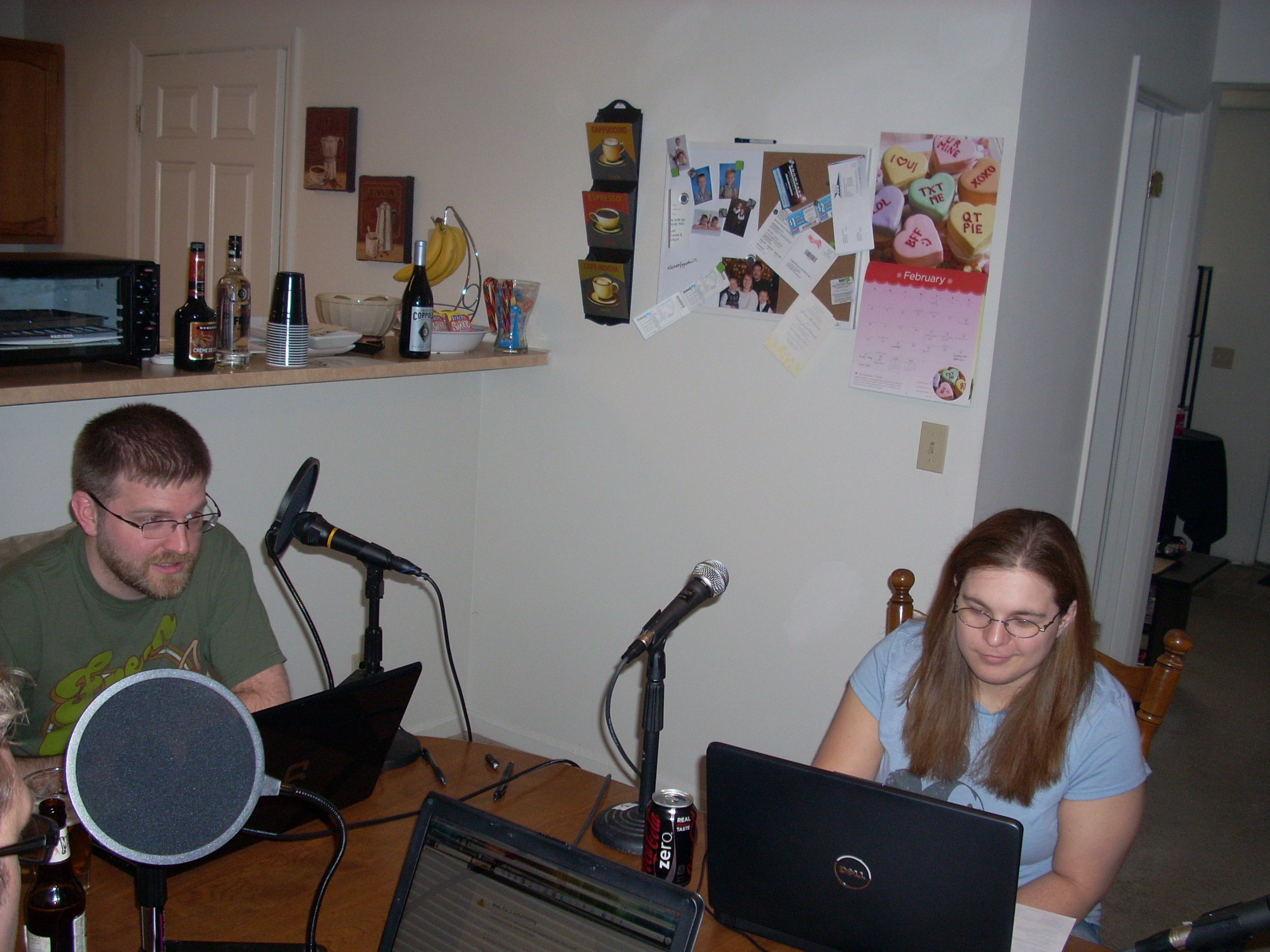
This was the show we recorded the afternoon before the Oscars. Listen as we predict that Fincher would win Best Director for The Social Network, and that Franco and Hathaway wouldn't do a good job. At least we weren't wrong about everything. Also, if the mere sound of Ryan and I talking drives you crazy, fear not, we have two guests with us for this show. Thanks to Courtney Felix and Matt Trueblood for joining us. Matt and Courtney don't really know much about movie, I mean they both thought King's Speech was going to win Best Picture. No way that happens, not when Ryan and I were voting for Social Network. All kinds of wrong in this show. Enjoy.
Oscar Contest Winners
We had dual winners in our Oscar Contest: Brian Bedard and Paul Jarnigan. Congratulations fellas. Right now we are trying to decide whether to send you a copy of Leprechaun (with Jennifer Aniston!) or Critters 3 (with Leonardo Decaprio!) Win-win, I think.

Tuvalu
Starring: Denis Lavant, Chulpan Khamatova Directed by: Veit Helmer
Reality can be frustrating, depressing, boring, irritating…in short, something from which we want to escape. Movies can help us do that, especially if they offer a departure from reality to a world that is whimsical, fantastic…in short, allows us to escape. So when I read words like ‘delightful escape’ and ‘dream world’ in the description for the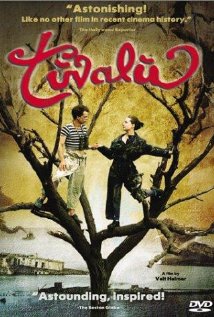 movie Tuvalu, I was all set to watch a happy film.
About 20 minutes into the movie, I had to pause it to make sure the black and white, mostly dialogue-less film I was watching was Tuvalu. The dream world appeared to consist of a socially backwards middle-aged guy setting up an elaborate sham in the bathhouse his family runs to convince his blind father – the lifeguard, operating on hearing alone – business is going swimmingly. His mother ensures the few ragtag patrons pay admission – either with coins or, bizarrely, buttons. Although everything else in the bathhouse is falling apart or in ill repair, the boiler/hot water heater contraption is in excellent shape.
One day the guy sees a beautiful young girl at the bathhouse with her father and immediately becomes obsessed with her. As she is completely preoccupied with other things – such as her home being destroyed, her father meeting an untimely demise and swimming naked with her goldfish at the bathhouse after hours – it takes a while for her to notice him.
Add to the mix:
- an evil businessman who is determined to make the bathhouse fail an inspection so he can tear it down and build a casino
- a posse of bums who come to the bathhouse every night to sleep
- a mysterious boat bequeathed to the young girl after her father dies
- constant rain whenever the guy leaves the bathhouse
…and I really felt like this more of a symbolic or artsy movie than a film to just sit back and enjoy.
Parts of it were still enjoyable – the second inspection of the bathhouse was pretty funny, and the blind lifeguard’s posturing is humorous. But overall the movie emphasizes the pathetic rather than allowing the viewer to escape from it.
If you:
- Like silent movies
- Enjoy movies that are a departure from the Hollywood format
- Find it exciting to analyze the movies you watch – particularly ones with a ‘little guy vs The Man’ theme
Put it in the queue.
However, if you want a movie that makes you forget:
- the constant struggle of the proletariat vs. the bourgeois
- bad guys don’t always give up after the good guy prevails
- that your brain is on
Don’t put it in the queue.
Written by Jennifer Venson
2011 OSCAR CONTEST
The Academy Awards are one week away and Coming Off the Reels is holding an Oscar contest. Simply type the category and who you think will win and send your picks to comingoffthereels@yahoo.com. Get the most right and you will score a glorious movie package! Will it contain a DVD of questionable value? More than likely. Will a fine piece of movie apparel be included? Couldn’t say for sure. Will it include a handful of Coming Off the Reels business cards for you to hand out to friends and/or throw away? You can bank on it!

You, the Living
Starring: Jessika Lundberg, Elisabeth Helander, Björn Englund Directed by: Roy Andersson
 Viewing a movie used to be based on seeing a trailer for the film and then, maybe, word of mouth. A good written review. Siskel and Ebert. With the advent of the VCR one might see a film based on the synopsis written on the box. Whatever the case you could probably give a reason as to why you saw a film. Because the trailer looked good, or because the back of the box sounded interesting or, hell, maybe even just because Michael J. Fox was in it.
Eventually there came the internet, and the wealth of information it has left almost literally at our fingertips. Now I see so many reviews and watch so many trailers and read so much information about film, some of which may or may not even be true, I sometimes forget why I saw a movie.
And so it is that I have no idea why I watched the Swedish Existentialist romanti-dramedy, “You, the Living.” It’s probably because Netflix recommended it based on my “taste preferences.” Or maybe I simply chose it based on the synopsis. Maybe because it sounded difficult and mysterious. Who knows. Maybe those Bing search overload commercials are really on to something.
“You, the Living,” is like one of those films where there are seven or eight different vignettes and then, in the end, they are carefully woven together to show how everybody’s lives are amazingly, inexplicably intertwined to create the beautiful existence we call life.
Except, in “You, the Living,” there are somewhere in the range of 50 vignettes presented in a film lasting under 90 minutes. Some of them are intertwined, and some of them aren’t. Some of them are funny, some are sad and some….well, some simply exist. So I guess, actually, it is nothing like those films.
There were times, during the viewing of “You, the Living,” when I found myself thoroughly enjoying a particular vignette. Maybe because it was funny (my favorite scene is one in which a man recounts a dream where he tries to pull the tablecloth out from underneath a family meal to no avail. Subsequently he is sentenced to death by electrocution) or insightful to the human condition. Unfortunately that enjoyment crashed back down as I was forced to watch an entire bit revolving around a man on the telephone. In its oversimplified style, you are greeted with a scene in which the camera is static and you only hear one side of the conversation. The voice on the other end of the phone is inaudible.
So it goes and, as you would expect when you are trying to cram fifty-ish vignettes in to a 90 minute running time, there is plenty of hit and miss.
The one amazing thing about the film is director Roy Anderrson’s style choice. Nearly every single vignette is shot with no camera movement, but the camera is placed so perfectly you hardly notice. The depth given in a static shot of a room is astounding. In almost every shot there is something going on in the background -- outside a door, or a window for example. Inside the room may just be a reflection of everyday life. In this way he creates something interesting to look at without having to compromise the style he has chosen for the rest of the film, and in that regard it works brilliantly.
That, I think, speaks a lot to the idea of the film. Every minute of every second of our lives is not filled with snappy dialogue or explosions or dramatic decision making. Unfortunately, exploring the banal minutiae of everyday life with no clarification, background or character development doesn’t necessarily make for very enthralling cinema.
Written by Ryan Venson
Revolutionary Road
Starring: Leonardo DiCaprio, Kate Winslet Directed by: Sam Mendes
Many years ago, a male love interest of mine refused to get into a serious relationship with me because he thought we were too much alike. He claimed we would 'destroy each other,' because we are both very stubborn, of a fiery Aries nature, and also sometimes prone to melancholy. At the time, I thought it was just a lame excuse – and I kind of still do. But after watching Revolutionary Road, I think there might be some truth to the idea.
Revolutionary Road paints a strong portrait of the 'whited sepulchre' of suburban life in the mid-1950s. Frank 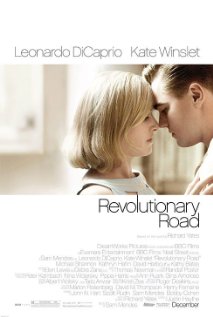 (Leonardo DiCaprio) and April Wheeler (Kate Winslet) are two people extremely unhappy with their suburban lives. They get into an uncomfortable-to-watch argument early in the film, Frank angry that April doesn't want to go out for drinks with friends after she performs in a sub-par local play. Both perceive that they have given up on the exciting lives they meant to have to behave according to the (boring) constraints of the American Dream. Frank is bored by his job and chafes at working in the same company his father once did. April feels stifled and frustrated by Frank's inability to understand why she is unhappy.
For a while, they agree on an unconventional move to Paris where Frank can 'find himself' and April will support the family as a secretary. Domestic harmony – both in their delight of shocking everyone who thinks their plan is ridiculous, immature, etc. and in their excitement about having something to look forward to – reigns for a time. The question is – will they actually carry through with it, or abandon their dreams again? The movie takes a very hard look at fear of the unknown and unconventional and how we often let one opportunity slip away for fear of losing another.
Both characters, at times, emotionally punish each other in different ways while justifying their own behavior. Mostly, this resulted in overly dramatic arguments and some gratuitous infidelity. And in the end, they destroy each other.
I can't recommend putting this movie in the queue unless you really like to see people argue and do not prefer your movies to have at least a little flavor of hope that happily ever after is possible.
I also recommend that Leonardo DiCaprio take a break from roles where he is married to unpredictable and/or unbalanced women (similar to Shutter Island and Inception).
Written by Jennifer Venson
Amélie
Starring: Audrey Tautou, Mathieu Kassovitz, Dominique Pinon Directed by: Jean-Pierre Jeunet
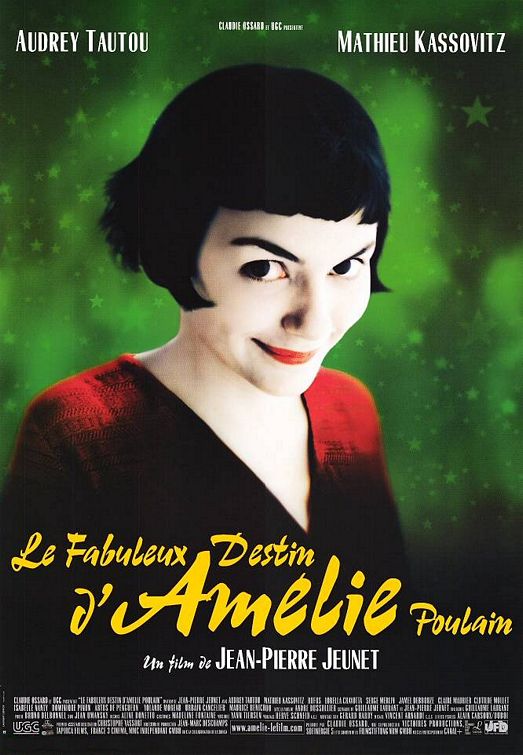 When I decided that I was going to review movies about love for this site, the only thing that I knew for sure was that Amélie would definitely be on the list. Over the last ten years, Amélie has been one of the films by which all others have been compared, romantic or not. When my wife and I were married, it was the music from this film that proceeded “you may kiss the bride”. So when I tell you that Amélie means a lot to me, I promise I am being sincere.
The film revolves around Amélie Poulain who, after spending most of her childhood alone, has grown up to be a very solitary woman with an imagination that seems to be always dialed to eleven. One day Amélie discovers of hidden box full of a child’s odd and ends in her apartment. When she realizes the box must have belonged to a previous tenant, Amélie decides to track the man down and return it to him. Upon seeing the reaction of the man when he opens his once treasure chest, Amélie decides that she will devote her life to helping people.
The above synopsis hardly does this film justice. Beyond this story about a woman helping people, there are themes and ideas that will strike at the heart of most people. Almost every character in the movie is introduced with little vignettes in which we the viewer become privy to the most mundane things that each character hates, and the simple pleasures that bring them each unexplainable joy. It is the idea of simple pleasures that not only introduces us to the cast of characters, but also connects them to each other and the world at large.
With several of our characters, we are also given brief insights into their childhoods. While this facet of the films may be minor, it is perhaps my favorite. It is weird what we remember from being a child. Moments that seem so inconsequential can stay with us longer than we can comprehend, and the rush of emotion that comes when remembered can be overwhelming. In watching these memories, we become sadly aware that the years have only served to magnify the characters hopes and fears, their personal tragedies, and their desires to find someone who understands them.
Amélie is a fairy-tale. You need to be aware of that notion before you begin your viewing. I always feel like most romantic films are extraordinary reflections of real life. Amélie on the other hand, is a story, not in the world we know, but in a world as we wish it could be. The colors are rich and velvety. The music is soft and sweet. No, Amélie is not something that could exist in the real world, but only in the amazing world of cinema. I cannot tell you how many times I have vehemently recommended this film to friends and strangers. It’s a movie about magic and mystery and garden gnomes and love…above all love. And after you watch it you will find that Amélie, like love, is meant to be shared with others.
Written By Drew Martin
Best/Worst of 2010
With the Academy Awards a mere two weeks away, we figure we had better go ahead and talk about what we thought were the best and worst films of 2010. Where will Unstoppable fall? It could go either way. There are also some honorable mentions for movies that might not be the best of the year, but are still a "must see". We also briefly discuss Winter's Bone...you may know it from all the nominations it has received lately. Proving once again that the Academy member feel compelled to nominate an indie film just so they can say they did. Enjoy.
Much Ado About Nothing
Starring: Kenneth Branagh, Emma Thompson Directed by: Kenneth Branagh
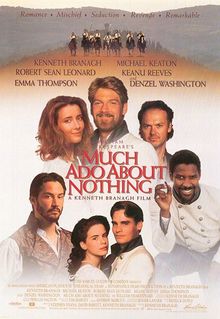 Sigh no more, ladies (and gentlemen). Valentine's Day is upon us, and truly it is a ridiculous and contrived holiday. However, I do feel the need to bestow you, my loyal readers, with a token of my appreciation for your support. In honor of my favorite comedy by Wm. Shakespeare and a statement of my true feelings on February 14th, I present you with my review of Much Ado About Nothing.
The plot specifics are relatively unimportant – if you know Shakespeare, you know what happens. Some sappy lovers and some comedic characters are introduced, a treacherous plot by a evil jerk emerges, an event that throws a monkey wrench into the whole works (in this film, it has to do with mistaken identity) occurs, the audience gets some comic relief from a buffoon, there is a faked death, a rift in a friendship and/or threats of violence happen, and then there is a happy resolution with marriage, music and dancing.
The beauty of this film is the casting.
- Keanu Reeves is the villain; his first line is "I am a man of few words." His acting style conforms well to a character who displays passive-aggressive unhappiness with stiff posture and a scowl.
- Denzel Washington as the charming Don Pedro, striding through the film with presence and grace. He is a natural and respected leader among the band of soldiers he commands, a sincere courtier to the ladies – yet not above schoolboy mischief.
- Michael Keaton as the oddball and not-too-bright constable Dogberry who rides around on an invisible horse, is highly offended by a prisoner calling him an ass, and unwittingly saves the day.
- Robert Sean Leonard and Kate Beckinsale as Claudio and Hero, the two innocent lovers. Both are cutely earnest, very gullible and cry a lot (especially Claudio). Yet, we can't help but hope these two kids can work things out. What's a Shakesperian comedy without a wedding in Act V?
- Emma Thompson and Kenneth Branagh as Beatrice and Benedick are the pair that truly make this a great comedy. Both are fiercely stubborn, 'more mirth than matter,' and set against marriage. Whenever they meet they only speak to each other in humorous insults. After Don Pedro and others decide it would be very merry indeed to convince Benedick that Beatrice is in love with him (and vice versa), the following scenes are absolutely hysterical. While Benedick attempts to hide behind a shrubbery in the garden, Don Pedro and company spin yarns of a love-struck Beatrice with giggling glee.
As far as Shakespeare remakes go, I put it at the top of the list (closely followed by the Baz Luhrmann version of Romeo and Juliet, Hamlet with Mel Gibson, and 10 Things I Hate About You (which is loosely based on The Taming of the Shrew).
If you:
- have an aversion to The Bard
- prefer your movies in modern English rather than Ye Olde English
- don't enjoy British humor (especially 16th century British humor)
Don't put it in the queue.
If you:
- like a witty comedy
- are willing to endure (or at least fast-forward) the mostly dull Act IV
- enjoy a star-studded film that requires – and delivers – actual acting
Put it in the queue!
Written by Jennifer Venson
Dogtooth
Starring: Christos Stergioglou, Aggeliki Papoulia, Mary Tsoni, Hristos Passalis Directed by: Giorgos Lanthimos
I have seen some odd movies in my time. I have seen movies about time-traveling midgets, clay-animated surgically-removed serial-killing Siamese twins, people eating dumplings made out of babies in order to stay young, a Japanese film where a man turns in to a machine after he accidentally kills a man who likes to stab himself with rebar, a Czech film about a woman who raises a log as a child where the log eventually comes to life and starts eating people. Oh, and Eraserhead.
It would be hyperbole to say none of those hold a candle to Dogtooth. The above mentioned films are weird. Really  weird. The one thing that differentiates Dogtooth from those films is its complete lack of the fantastic. The aforementioned films (Time Bandits, Basket Case, Dumplings, Tetsuo the Iron Man, Little Otik and, well, Eraserhead) all use dreamlike, abstract, incredible imagery to add to the storytelling. Dogtooth is subdued and grounded in realism from the beginning.
Dogtooth takes place in Greece. We are never given a lot of context as to where in Greece, as the plot revolves around a mother and father raising three early twenty-something children who they have never let off the property. Never. They are told the outside world is too dangerous but, someday, when they lose their “dogtooth,” they will be allowed to venture out in to the world. In order to make this more tangible, the parents even create an older brother who lives on the outside.
Since there are no visitors, no friends, save a security guard at the father’s workplace whom he pays to have sex with his son once a week, we aren’t given any real insight in to why the parents have chosen this path. There is never a plausible reason for the parents to reveal this to the audience, and the film doesn’t force a reason. The reason seems to be that the mother and father really do think the exterior world is too corrupt. They actually believe they are helping their children by giving them completely sheltered lives. The father says something to this effect in the few seconds available for exposition in the entire film -- after he batters a woman with a VCR.
At the same time, however, they seem to have no problem taking advantage of their innocence by creating games for their own enjoyment. They teach the children incorrect vocabulary -- “sea” is a leather arm chair, a “motorway” is a very strong wind, a “carbine” is a white bird. They make them compete in feats of endurance and reward the winner with stickers. Whoever wins the most stickers at the end of the week gets to decide the entertainment for the night.
The film is not an easy watch. Its pacing is deliberate. The relationship between the siblings is loving, but also awkward and, at times, unsettling. Relationships and sexual desire and how they manifest in a household where no outside influences are ever allowed is a significant theme. The father takes on the burden of antagonist in the film, insofar as there is one. He goads his children in to, at the very least, abnormal activities and, at the very worst, out-and-out creepy activities. In this you are left to decide whether the parents truly think they are acting in the best interest of their children, or simply out of sociological curiosity.
Written by Ryan Venson
Poetic Justice
Starring: Janet Jackson, Tupac Shakur Directed by: John Singleton
 I was enticed to watch the 1993 movie Poetic Justice after hearing the theme song "Again" on an 80s/90s R&B playlist Ryan put together. I had been meaning to watch it for a while, but it was never a must-see.
The concept behind the movie seems pretty good – young Justice (Janet Jackson) who was devastated by the shooting death of her first boyfriend starts writing poetry to help her cope. And she also learns to love and trust again after she meets Lucky (Tupac Shakur).
Overall, this movie was a real disappointment. Having read a book of Tupac's poetry, The Rose That Grew From Concrete, I was hoping the movie would actually have Justice writing something deep and meaningful. However, her scenes of 'poetry' are just her rambling in a notebook.
Also, Justice and Lucky pretty much hate each other through most of the movie.
Pretty much all of the characters except Justice and Lucky are very one-dimensional and seemed stereotypical. Based only on this movie, it seems that everybody in South Central LA has a short temper and a limited vocabulary of profanity, everybody knows somebody that's been killed by gang related violence, and there are a lot of people with alcohol or drug problems.
You actually get more information about Lucky than Justice – he's trying to be a standup guy – good job with the post office, trying to shield his daughter from her mama's messed up life and ensure she is raised with structure and love rather than chaos, he likes to hang out with his rapper cousin in Oakland. As Tupac is good looking and a good actor, this wasn't a problem.
There is minimal insight into Justice's life and background – outside the fact that she is a hairdresser, inexplicably owns a house, and is mourning her boyfriend – until midway through the movie she reveals a bunch of family history during a screaming match with her best friend.
I'm not saying the movie is all bad. There is actually a really good scene where Justice, Lucky, Justice's friend Iesha (Regina King) and Lucky's co-worker Chicago (Joe Torry) crash a family reunion on their way to Oakland. It is one of the least forced scenes in the movie and also includes an interesting cameo by a real poet.
If you:
- Like drama, drama and more drama
- Like the nostalgia of movies from the '90s
- Don't need to have a coherent storyline to enjoy a movie
- Are fascinated by movies where Janet Jackson REALLY shows a resemblance to her brother Micheal
Put it in the queue.
If you:
- Are irritated by characters that chew gum like it's their job throughout the entire movie
- Are offended by lots of profanity
- Like character development and an interesting plot
Don't put it in the queue.
Written by Jennifer Venson
King's Speech and Gatoroid
This week Drew and I watched Mega Python Vs. Gatoroid, then the King's Speech. Then a second helping of Mega Python Vs. Gatoroid. The way we figured it, you can never have too much Debbie Gibson AND Tiffany...yes, both 80s pop stars share top billing...sandwiched around a grandiose Academy Award nominated period piece. .
.
.
Mmmmm.....Debbie Gibson/Tiffany sandwich......

the-kings-speech


mega-python-vs-gatoroid-1
Speed Racer
Starring:Emile Hirsch, Christina Ricci, Matthew Fox Directed by: Andy Wachowski, Lana Wachowski
 How the %&!# is Speed Racer a movie about love? I am sure that is what you were asking yourself when you saw this title come up. And you would be right to question this choice. On the surface, Speed Racer was a rather poorly reviewed film that many thought was all flash, and no substance. Of course, if you remember, I told you that much of the time context is key when talking about an emotional connection to a film, and this is an example of just such a connection.
To be honest, Speed Racer isn’t a great film. I believe it is better than the 38% it received from RottenTomatoes.com, but I am not here to argue with critics. The plot is pretty standard; Speed Racer and his family must race cars in order to stick it to the man. The Racer family is assisted with the help of the mysterious Racer X. The plot is…okay, and the visual effects of Speed Racer are absolutely beautiful if you are will to accept it as “cartoony”.
The reason why I have included this particular film in a list of movies about love is because of the family dynamic, specifically the idea of being a brother. It wasn’t until I became older that I fully began to appreciate that I have two brothers. And while I will often complain about being the middle child, the truth is I wouldn’t want it any other way. Believe it or not, Speed Racer, in very broad strokes, paints of nice picture of what I like about having two brothers. The way Speed (that is the main character’s name) looks up to his older brother Rex, as though he were the example by which he should model himself, reminds me of how much I admire my own brother. At the same, Speed knows the importance of trying to be the best version of himself knowing that his little brother is looking to him as an example. Whether I was successful at it or not, I’d like to think I tried to do that with my little brother.
Maybe most of the people out there will not like Speed Racer, and I guess I can understand why, but that does not mean that the film has no merit. Regardless of my own perceptions of the film, the importance of family is a theme that is heavily represented in this film, and that’s got to be worth something. So maybe I look at Speed Racer through rose colored glasses. Maybe my own connections have made me blind to some obvious flaws in the narrative. Maybe the fact that the young Speed Racer at the beginning of the film reminds me of one of my nephews, who I don’t get to see as much as I would like, has made me sentimental when I should try and be objective. All I know is that as the hassles of life take my brothers and I in different directions, watching this movie makes me feel connected to them, and there is nothing wrong with that.
Written By Drew Martin